Essay
Autism and Burnout: On Running Out of a Fuel Other People Don't Seem to Use
The Author · Sep 6 \u00b7 15 min read
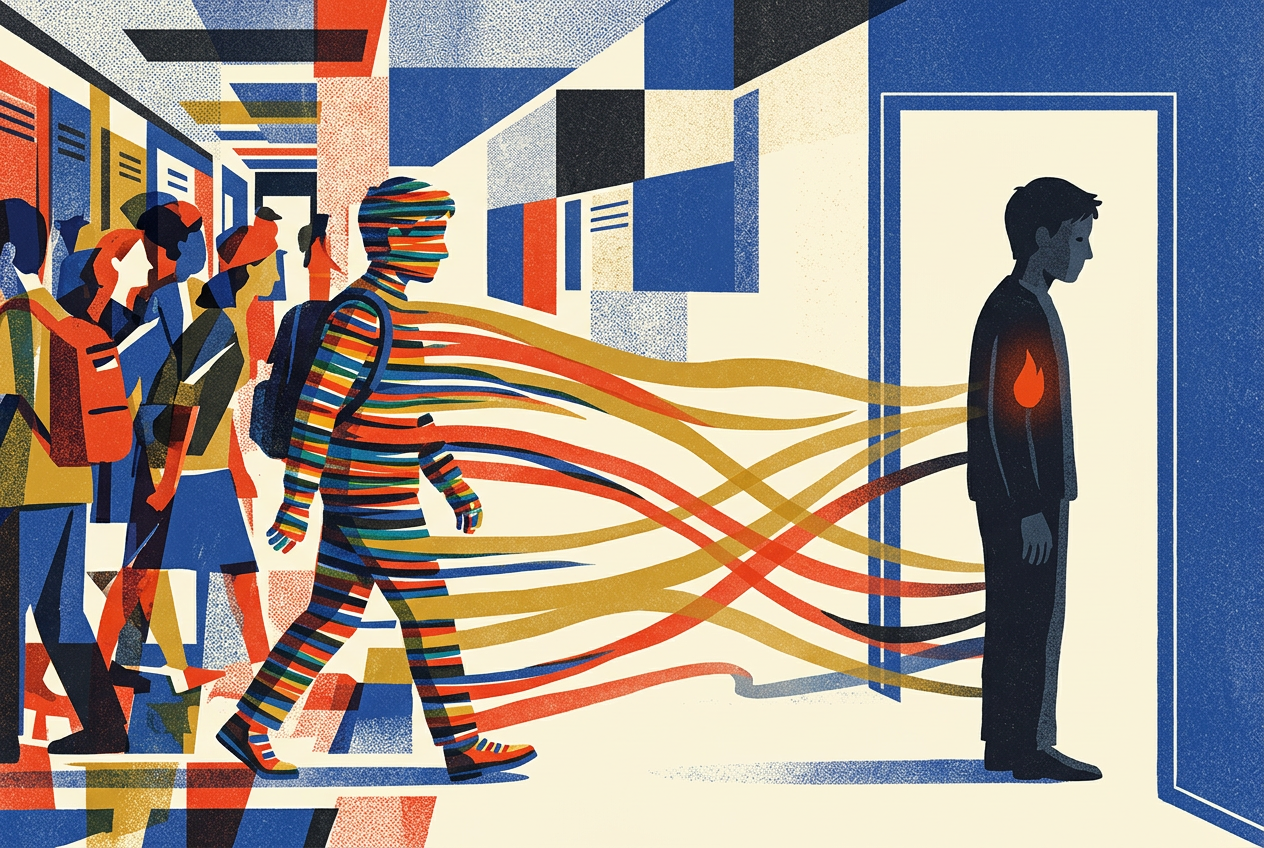
There's a version of tired that doesn't respond to sleep. It isn't the kind that a weekend off fixes, or a vacation, or even a full week of doing nothing. It sits underneath everything, flattening enthusiasm, dulling language, making ordinary tasks like replying to a text or making dinner feel like they require a kind of effort that used to be automatic. For a lot of autistic people, this isn't just exhaustion. It has a name now, a growing body of research behind it, and a very specific cause that most workplaces, schools, and even doctors still routinely miss.
This post is about autistic burnout: what it actually is, why it's different from ordinary tiredness or clinical depression even though it can look like both, what causes it to build for years before it finally breaks through, and what actually helps someone come back from it.
What the Research Shows
Autistic burnout entered the academic literature relatively recently, largely because autistic adults kept describing an experience that didn't fit neatly into existing categories, and researchers eventually started listening. A landmark study led by autistic researcher Dora Raymaker and colleagues in 2020 defined it as a syndrome resulting from chronic life stress and a mismatch between expectations and abilities, without adequate support, characterized by pervasive, long-term exhaustion, loss of function, and a marked reduction in tolerance to stimulus.
That last part matters. Burnout doesn't just make a person tired; it often strips away skills that used to be reliable. Someone who used to speak fluently in meetings might find words harder to access. Someone who used to tolerate a loud office might find the same environment suddenly unbearable. Executive function, the ability to plan, start tasks, and switch between them, tends to be one of the hardest hit areas, which is part of why burnout so often gets mistaken for laziness or a sudden lack of motivation, when what's actually happening is closer to a system that has run past its actual capacity for a long time without anyone noticing.
The mechanism researchers point to most consistently is the cumulative cost of masking, the ongoing, effortful work of suppressing autistic traits and performing neurotypical ones instead: forcing eye contact, scripting conversations in advance, suppressing stimming, tolerating sensory environments that are quietly painful, all day, in a way that never fully switches off. A 2021 study on autistic masking found that people who reported masking more consistently also reported higher rates of exhaustion and, notably, higher rates of suicidal ideation, underlining that this isn't a minor inconvenience but a real, cumulative cost with serious consequences when it goes unaddressed for long enough. Burnout is often what happens when that cost finally exceeds what a person can keep paying.
Why It Feels Different
A few features distinguish autistic burnout from ordinary tiredness, and from depression, which it's frequently confused with.
It's caused by a mismatch, not a mood. Depression can appear without an external trigger and often comes with a loss of interest in things a person used to enjoy. Autistic burnout is usually a direct response to sustained environmental demand exceeding capacity, and interest in old passions frequently stays intact even when the energy to pursue them has disappeared, which is one of the clearer signals distinguishing the two.
Skills go missing, not just motivation. People in autistic burnout commonly describe a temporary loss of previously reliable abilities: speech becoming harder to produce, planning becoming nearly impossible, sensory tolerance collapsing. This regression is often mistaken for regression in the clinical sense, but it tends to be reversible with enough rest and reduced demand, which separates it from a permanent skill loss.
It builds slowly and invisibly. Masking works, for a while, precisely because it's designed to. The cost doesn't show up as an obvious injury the way overexertion might in a physical sense. It accumulates quietly across years, often while the person is being praised for how well they're coping, right up until the system finally gives out.
Rest doesn't look like rest to other people. Recovering from autistic burnout often means significantly reducing social contact, sensory input, and obligations, sometimes for months, in a way that can look from the outside like withdrawal, laziness, or even a mental health crisis requiring intervention, when it's frequently the exact thing the nervous system needs in order to recover.
The Different Shapes This Can Take
The slow fade. Energy and function decline gradually over months, often going unnoticed by the person themselves until a task that used to be simple suddenly feels impossible.
The sudden collapse. A person who seemed to be coping fine hits a specific threshold, often after a period of unusually high demand, a new job, a house move, a family crisis, and the drop in function happens abruptly rather than gradually.
The cyclical pattern. Burnout that recurs on a rhythm, often tracking with periods of heavier masking, like a school year or a demanding work season, followed by partial recovery during lower-demand periods, without ever fully resolving.
The hidden burnout. A version that stays largely invisible to everyone outside the person's own head, maintained through sheer effort at work or in public, with the actual cost paid entirely in private, in the hours and relationships that never see the mask come off.
A Personal Note
By the middle of junior year, I looked completely fine at school. My grades were still good, I showed up, and I laughed when everyone else laughed. What nobody saw was how much effort it took to act normal through seven classes. I would force eye contact, stay still when I needed to move, and pretend the hallway noise wasn't making my brain hurt. Then I would get home and lie on my bed in the dark because even answering a text felt impossible. I started forgetting easy words during class and sometimes couldn't figure out the steps to make food after school. I thought I was getting lazy or somehow less smart. An autistic student I follow online described burnout, and it was the first explanation that actually sounded like my life. I dropped one activity, started wearing headphones more, and stopped making myself act okay at home. It took a while, but things slowly got easier. I still worry about falling that far behind my own brain again, but now I know the warning signs aren't a character flaw.
Where People Get Stuck
Reduced function during burnout gets treated as a sudden decline requiring urgent diagnosis or correction, when it's frequently a temporary and largely reversible response to sustained overload. Withdrawal from social contact during recovery gets read as depression or avoidance, when it's often exactly the reduction in demand the nervous system needs in order to recover function. A person who seems fine on the outside gets assumed to actually be fine, when the entire point of masking is that it's designed to look convincing from the outside regardless of the cost being paid underneath it. And burnout gets treated as something that should resolve with a weekend off, when the recovery timeline for a cost built up over years is realistically measured in months, sometimes longer.
What Helps
Reduce demand before trying to build capacity back up. It's tempting to treat burnout like a productivity problem to solve with better systems or more willpower, but the actual fix usually starts with removing load, not adding structure, at least at first.
Let masking come off somewhere. Even a small amount of time each day where stimming, blunt speech, sensory accommodations, or simply not performing a neurotypical version of oneself is allowed tends to meaningfully slow the accumulation that leads to burnout in the first place.
Track energy like a resource, not a mood. Framing certain activities as ones that cost energy and others as ones that restore it, regardless of whether they "should" logically do either, gives a more honest picture than trying to reason about it from the outside.
Expect the recovery timeline to be longer than feels reasonable. Burnout that took years to build rarely resolves in a week, and expecting a fast bounce-back tends to just push a person back into the same cycle before real recovery has happened.
Get support that understands the difference from depression. A treatment plan built for depression, more activity, more social engagement, more structure, can actively worsen autistic burnout, which usually needs the opposite: less input, less demand, more room.
A Word on Boundaries
Recognizing burnout is not the same as having permission to disappear from every responsibility indefinitely, and most people navigating it know that distinction already. What it does mean is that some obligations may need to be renegotiated honestly rather than white-knuckled through at an unsustainable cost, and that asking for that renegotiation isn't a personal failure. It's a reasonable response to a real, documented cost that was quietly accumulating long before anyone noticed it.
A Note for Friends and Partners
If someone in your life seems to have quietly stopped being able to do things that used to come easily to them, the most useful thing you can offer is usually not encouragement to push through, but permission to stop pushing. Reduced contact during a recovery period isn't a comment on the relationship. A person coming out of burnout will often reappear gradually, in their own time, and the relationships that survive it best tend to be the ones that didn't require an explanation while it was happening.
Sources and further reading
- Defining Autistic Burnout — Raymaker et al. (2020)
The foundational participatory study defining autistic burnout through lived experience.
- Defining autistic burnout through experts by lived experience
A 2021 grounded Delphi study investigating how autistic people define burnout.
- Autistic Adults’ Experiences of Camouflaging and Its Perceived Impact on Mental Health
A qualitative study of masking and its reported effects on autistic adults’ mental health and wellbeing.
- Autistic Self Advocacy Network
Accessible, autistic-led information about autism, support, and self-advocacy.
- Reframing Autism
Autistic-led education and writing about masking, burnout, and wellbeing.
- Monotropism
Resources connecting autistic attention styles with energy, overload, and wellbeing.
None of this needs to be apologized for. A mind that has been quietly paying a cost for years is allowed to stop paying it, and rest that looks unusual from the outside is still rest.