Essay
Autism and Loneliness: On Wanting Connection Badly and Still Ending Up Alone
The Author · Sep 12 \u00b7 15 min read
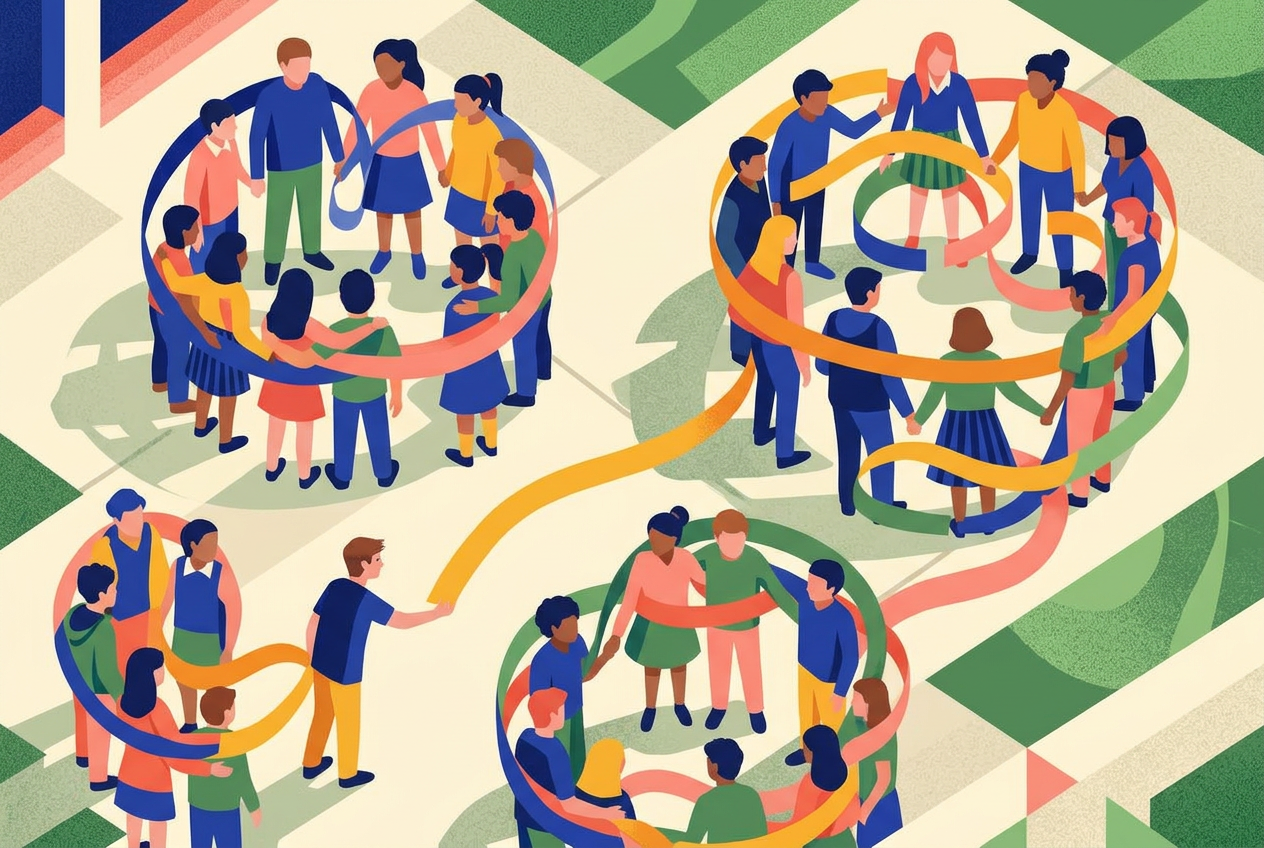
There's a stubborn myth about autism that refuses to fully die, the idea that autistic people simply prefer to be alone, that solitude is the natural and comfortable state and other people are an inconvenience tolerated at best. Anyone who has actually sat with an autistic person describing their inner life knows how far that myth sits from the truth for most of them. The far more common experience is wanting connection intensely, working hard for it, and still ending up isolated anyway, not because the desire wasn't there but because the path to satisfying it kept running into walls that had nothing to do with desire at all.
This post is about that particular kind of loneliness: what actually causes it, why it tends to run deeper and last longer for autistic people than the research on loneliness in general would predict, what it looks like from the inside, and what genuinely helps close the gap instead of just papering over it.
What the Research Shows
Loneliness research has consistently found that autistic adults report higher rates of chronic loneliness than the general population, and importantly, the data doesn't support the idea that this comes from a lower desire for connection. A number of studies measuring social motivation directly have found autistic adults reporting a desire for friendship and closeness comparable to, and in some samples higher than, non-autistic comparison groups. The loneliness isn't explained by wanting less. It's explained by a gap between wanting and getting.
Part of that gap has a name researchers call the double empathy problem, first proposed by autistic researcher Damian Milton in 2012. The traditional framing of autism assumed a one-directional deficit, that autistic people struggle to understand and connect with others. Milton's reframing pointed out that misunderstanding runs both ways: non-autistic people are frequently just as bad at reading autistic social signals as the reverse is assumed to be true, and subsequent research measuring information transfer between autistic and non-autistic pairs has supported this, finding that communication and rapport-building between two autistic people can be just as smooth as between two non-autistic people, while cross-neurotype communication is where the friction concentrates for both sides. Loneliness, under this framing, isn't a personal deficit in the autistic person. It's frequently a mismatch problem, made worse by a world built almost entirely around one communication style being treated as the default.
There's also a structural piece. Many of the informal settings where friendships typically form and get maintained, casual hallway chat, unstructured social events, workplace small talk, rely heavily on exactly the kind of fast, implicit social processing that tends to be harder and more effortful for autistic people to sustain. That doesn't mean the capacity for connection is missing. It means the venues available for building it are frequently built around a format that doesn't play to an autistic person's actual strengths, leaving a lot of otherwise well-suited friendships never getting the chance to start.
Why It Feels Different
A few specific dynamics tend to deepen this loneliness beyond what a simple desire-versus-outcome gap would predict on its own.
The effort is invisible to everyone but the person making it. Reaching out, initiating a hangout, remembering to check in, all of it might cost significantly more conscious effort for an autistic person than it appears to from the outside, and when that effort doesn't get reciprocated at a comparable rate, it can feel like proof that the desire was never actually shared, even when the real explanation is closer to a difference in how much effort each side is spending to arrive at the same outcome.
Masking makes even successful connections feel hollow. A friendship maintained largely through a performed, edited version of oneself can produce real affection and real enjoyment while still leaving an underlying loneliness intact, because the parts of a person doing the actual connecting were never the full, unfiltered version to begin with.
Rejection sensitivity raises the cost of trying again. Earlier attempts at friendship that ended in confusion, miscommunication, or a slow fade a person never fully understood tend to leave a lasting caution around trying again, which can look like disinterest from the outside when it's closer to self-protection built from real prior experience.
The good matches are rarer and harder to find. Because cross-neurotype communication research suggests friction concentrates specifically at the boundary between neurotypes, the friendships that end up feeling easiest and least effortful for many autistic people are disproportionately the ones formed with other autistic or otherwise neurodivergent people, and those specific people simply aren't always close at hand or easy to identify.
The Different Shapes This Can Take
The wide net that keeps missing. Regularly attempting to build friendships through conventional, high-volume social settings, activities, workplaces, general social events, that keep producing pleasant acquaintances but rarely anything that deepens, because the format itself isn't suited to how the connection would actually need to build.
The one deep friendship carrying everything. A single friendship, often with another neurodivergent person, that manages to hold the entire weight of a person's social and emotional needs, intensely valuable but also precarious, since losing it, even temporarily, can feel like losing the entire support structure at once.
The online-first connection. Relationships built primarily through text-based or interest-based online spaces, where the pace and format remove a lot of the friction present in live interaction, sometimes producing closeness that feels realer and easier than most in-person relationships a person has access to.
The performed social life. A visible, apparently active social calendar maintained largely through masking and effort, that produces plenty of contact but very little of the actual felt connection the person was originally looking for.
A Personal Note
I know a lot of people at school. I have group chats, people say hi to me in the hallway, and I usually have somewhere to sit at lunch. So I felt stupid admitting that I was lonely. One day I was sitting at a table with people who were being nice to me, and I still felt like I was watching the whole conversation through glass. I knew how to joke and keep things light, but whenever I started talking about something I actually cared about, I could feel everyone waiting for me to finish. Then I met another autistic student through an art club. We ended up talking about one really specific interest for almost the whole meeting, and neither of us had to pretend it was boring. That conversation made me realize being around people is not the same as feeling known by them. I didn't need a bigger friend group. I needed at least one friendship where I wasn't constantly editing myself.
Where People Get Stuck
A wide social circle gets treated as proof that loneliness can't really be present, when the two are frequently unrelated, since loneliness tracks with depth of connection far more than with number of contacts. Difficulty initiating or maintaining casual social contact gets read as a lack of interest in people, when the research consistently points the other way, toward comparable or higher desire for connection paired with a harder path to satisfying it. A strong preference for fewer, deeper relationships gets pathologized as social avoidance, when it's often simply an accurate read on where that person's actual connection needs get met. And the loneliness itself gets treated as something the autistic person needs to individually fix, usually through more socializing, when a meaningful part of the actual problem sits in the mismatch between two communication styles, not in a deficit located in only one of them.
What Helps
Prioritize depth-friendly venues over high-volume ones. Interest-based communities, structured activities with a shared focus, and settings that don't rely on fast unstructured small talk tend to produce a much higher rate of real connection than generic social events do.
Look toward other neurodivergent people, without treating it as a consolation prize. Given what the double empathy research suggests about where communication friction concentrates, seeking out other autistic or neurodivergent people isn't a lesser substitute for "real" friendship. For a lot of people it's simply where the easiest, least effortful connections turn out to live.
Let a friendship go slower and stranger than the default script. Some of the deepest connections form specifically in the conversations other social norms would have cut short, and protecting the space for that kind of conversation to run its full length is often what allows the depth to actually show up.
Treat online and text-based friendships as fully real. A connection that started or lives primarily online isn't a lesser version of one built in person. For many autistic people, the removal of certain kinds of real-time processing pressure is exactly what makes the connection possible in the first place.
Address the loneliness of masked friendships directly. If a friendship feels pleasant but hollow, it's worth considering how much of the person actually showing up in it is the full, unfiltered version, and what it might take to let a little more of that version through, even with the risk that comes with it.
A Word on Boundaries
Wanting deep connection doesn't mean every relationship has to carry that full weight, and it's fine, even healthy, to have some friendships that stay lighter and more casual by design. The goal isn't to eliminate every low-effort relationship in favor of only intense ones. It's to make sure at least some relationships in a person's life are allowed to go as deep as they actually want to go, rather than every single one being capped at the same shallow default by unspoken convention.
A Note for Friends and Partners
If someone in your life is autistic and seems to want a conversation to go further, longer, or stranger than feels typical, that's usually not a sign of something being wrong. It's often an invitation. Following it, rather than gently steering things back to something safer and shorter, is frequently the single easiest way to become one of the rare people who actually gets to feel close to them, rather than one more pleasant, low-stakes contact in a long list of people who never quite got there.
Sources and further reading
- On the ontological status of autism: the double empathy problem
Damian Milton’s 2012 paper introducing the double empathy problem.
- The double empathy problem: Ten years on
A 2022 review of mutual understanding across different neurotypes.
- Neurotype-Matching, but Not Being Autistic, Influences Self and Observer Ratings of Interpersonal Rapport
Evidence that rapport is affected by whether conversation partners share a neurotype.
- Monotropism
Autistic-led resources on attention style, interests, and connection.
- Autistic Self Advocacy Network
Autistic-led resources on relationships, community, and self-advocacy.
None of this needs to be apologized for. Wanting connection badly and still ending up lonely isn't a contradiction, and it isn't a personal failing either. It's often just a sign that the right format, and the right people, haven't found each other yet.